

2026
How Ductless Mini Splits Improve Comfort in Additions and Hard-to-Heat Rooms
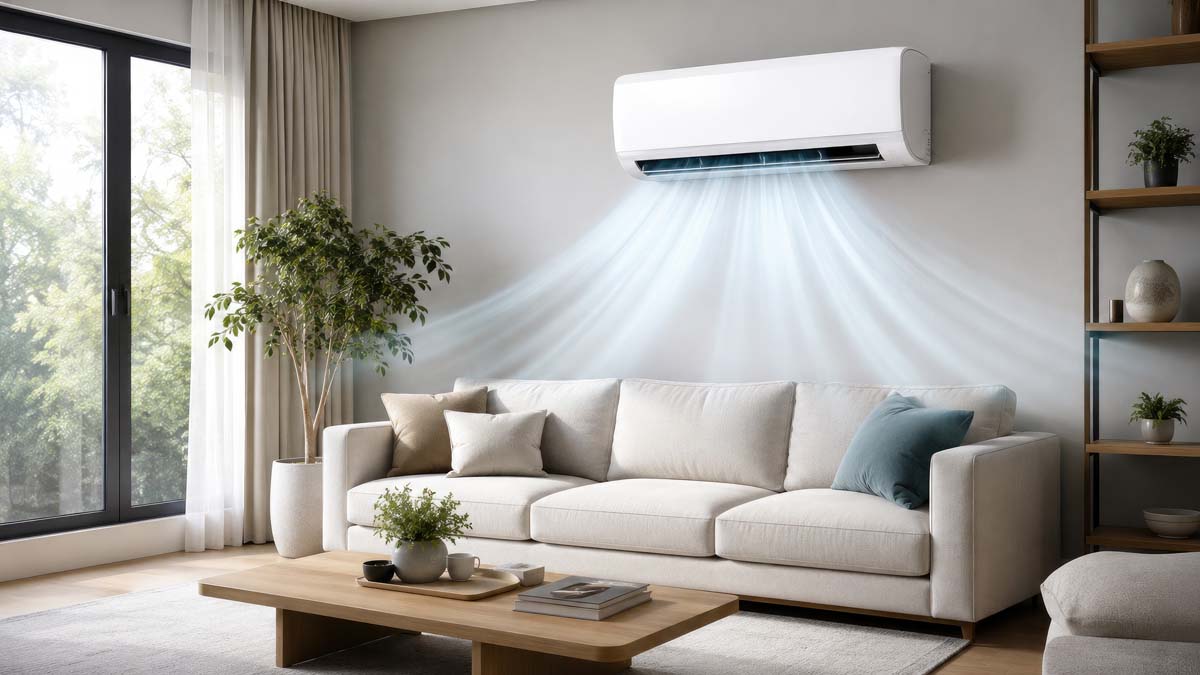
Most homes have one. The bonus room over the garage that never warms up. The basement suite that stays ten degrees colder than the rest of the house. The addition off the back that the original furnace was never sized to reach.
The usual fixes are a space heater in winter and a window unit in summer, which is why the problem never really goes away. A ductless mini split solves it differently, and for these particular rooms it is usually the right answer.
Why these rooms are cold in the first place
A forced air system is a balancing act. The furnace is sized for the house it was installed in, and the duct layout distributes air based on a design that assumed a particular floor plan. Add a room, finish a basement, or convert a garage, and that balance no longer holds.
Running a new duct branch to the far end of the system rarely fixes it either. Air takes the path of least resistance, so a long run competing against shorter ones delivers very little by the time it arrives. Meanwhile the rooms nearest the furnace get too much, and someone closes a vent, which throws the balance off again.
Rooms over garages have a second problem. They lose heat through the floor into an unheated space below, which no amount of warm air from a ceiling vent will overcome.
What a mini split actually is
A ductless mini split is a heat pump split into two parts. An outdoor compressor unit connects through a small conduit to one or more indoor heads mounted on a wall or ceiling. The conduit carries refrigerant lines, power and a condensate drain, and needs a hole roughly three inches across rather than a duct chase.
Because it is a heat pump, it moves heat rather than generating it. In winter it pulls heat from outdoor air and delivers it inside. In summer it runs in reverse and takes heat out. One piece of equipment handles both, which is a meaningful part of why these are so common on the South Coast.
The advantages that matter in a problem room
Several things make this equipment particularly well suited to additions and isolated spaces:
- No ductwork, so there is no need to open walls or ceilings or find a chase route
- Independent temperature control in that room, without affecting the rest of the house
- Heating and cooling from one system, which matters more every summer
- Inverter compressors that modulate output instead of cycling on and off, so the temperature stays steady
- Much quieter operation than a window unit or a portable heater
- Far better efficiency than electric baseboard, which is usually what these rooms have
That last point is the one that often decides it. Baseboard heating converts electricity to heat at a one to one ratio. A heat pump delivers several units of heat per unit of electricity, because it is moving existing heat rather than creating it.
Our climate suits this equipment well
Heat pumps used to carry a reputation for struggling in the cold, and in much of Canada that concern had merit. On the South Coast it rarely applies. White Rock, South Surrey and Langley spend most of the heating season well within the range where modern cold climate units operate efficiently.
Summers have also changed the calculation. Homes here were built on the assumption that cooling was optional, and the last several years have made clear that it is not. A mini split installed for a cold bonus room becomes the coolest room in the house in July, which is frequently the argument that convinces people. Whole-home heat pump systems work on the same principle at a larger scale.
Single zone or multi zone
A single zone system pairs one outdoor unit with one indoor head, and is the straightforward choice for one problem room.
A multi zone system runs several indoor heads from one outdoor unit, with each head controlled independently. That suits a finished basement with two or three separate rooms, or a situation where you want to solve several comfort problems at once. Multi zone costs more up front and requires a larger outdoor unit, but it is far cheaper than installing separate systems and it uses only one exterior location.
What installation involves
The work is less invasive than most people expect. The indoor head mounts high on an exterior wall, the outdoor unit sits on a pad or a wall bracket, and the two connect through a small penetration in the wall. A typical single zone installation is completed in a day.
What matters more than speed is sizing and placement. An oversized unit short cycles and dehumidifies poorly. An undersized one runs constantly and never quite gets there. Head placement affects how evenly the room conditions, and the outdoor unit needs clearance for airflow, drainage below it, and a location where the noise will not bother anyone. Electrical capacity has to be confirmed as well, since a new circuit is required and some older panels are already at their limit.
Book an assessment
Hilltop Plumbing & Heating has served White Rock, South Surrey and Langley since 1972, and our cooling and heat pump team installs and services ductless systems across the Lower Mainland. If you have a room that has never been comfortable, call (604) 536-5545 or get in touch and we will look at what will actually work in that space.